
Understanding Probability in Gambling
At its core, gambling is a game of chance governed by probability. Every bet placed, from a simple coin toss to a complex poker hand, has a quantifiable likelihood of occurring, and understanding the nuances of casino gransino can be a part of this learning process. Understanding these underlying probabilities is the first crucial step in developing a strategic approach, moving beyond pure luck to informed decision-making. This involves grasping concepts like odds, expected value, and house edge.
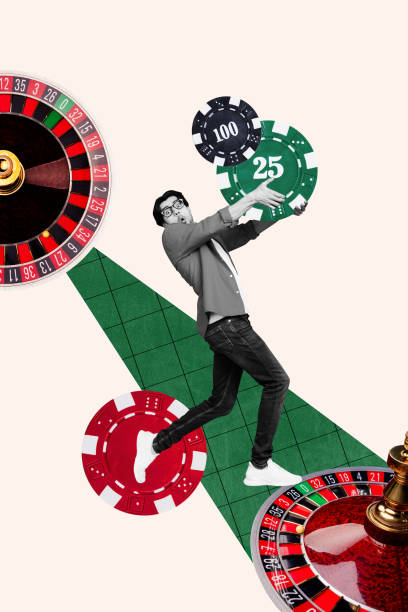
For instance, in a game like roulette, the probability of a ball landing on a specific number is easily calculated. However, when the bets become more complex, such as betting on red or black, or a range of numbers, the probabilities shift. Recognizing these variations allows players to identify bets that offer a more favorable outcome, even if the house advantage remains.
Leveraging Statistical Advantage
Optimizing a gambling strategy heavily relies on leveraging statistical advantages where they exist. This means actively seeking out games or betting scenarios where the probabilities lean, even slightly, in your favor, or where you can influence the outcome through skill and knowledge. Games like blackjack, for example, offer opportunities for skilled players to reduce the house edge significantly through strategic card counting and optimal play.
The concept of expected value (EV) is paramount here. A positive EV indicates that, over the long run, a bet is likely to yield a profit. Conversely, a negative EV suggests a guaranteed loss. A successful gambling strategy focuses on identifying and exploiting situations with positive EV, or minimizing losses in situations with negative EV by understanding the inherent probabilities involved in each decision.
Managing Bankroll and Risk with Probabilities
A disciplined approach to bankroll management is intrinsically linked to understanding probabilities. Knowing the statistical likelihood of winning or losing helps determine appropriate bet sizes relative to your total funds. This probabilistic approach prevents catastrophic losses from a few unlucky streaks, ensuring longevity at the gambling table.
For example, a player with a large bankroll might be able to afford to make larger bets even with a slightly negative EV, as the statistical probability of going broke in the short term is lower. Conversely, a player with a smaller bankroll must be far more conservative, prioritizing bets with a better probability of return to preserve their capital and extend their playing time. This risk management is all about understanding the mathematical probabilities of various scenarios unfolding.
The Role of Data and Analytics in Strategy
In the modern gambling landscape, data analytics plays an increasingly significant role in refining strategies. By analyzing past game outcomes and individual player performance, patterns can emerge that might not be immediately obvious. This data-driven approach allows for a more objective assessment of probabilities and the effectiveness of different betting systems.
Sophisticated gamblers and even online platforms utilize algorithms to process vast amounts of data, identifying subtle shifts in probabilities or predicting potential outcomes with greater accuracy. This analytical perspective transforms gambling from a purely intuitive pursuit into a more calculated endeavor, where understanding the underlying statistical models provides a competitive edge.
Navigating the Gambling Landscape with Precision
When considering platforms for gambling, understanding how they present odds and probabilities is key. While the fundamental laws of probability remain constant, different operators might offer varying odds, directly impacting a player’s potential returns. A discerning player will always compare these odds to ensure they are getting the best possible value for their wagers.
This involves not only understanding the stated odds but also recognizing the house edge inherent in each game offered. A platform that provides transparent information about these probabilities, and offers games with a lower house edge, is generally more favorable to strategic players. Ultimately, a successful gambling strategy is built upon a solid foundation of probabilistic understanding, applied with discipline and insight across all aspects of play.